
Curious Creatures
An adventure with my kids

I've always found myths fascinating for their essential role in shaping and reflecting the beliefs, values, and experiences of societies and individuals across history. During my teenage years, I delved into Vladimir Propp's 'Morphology of the Tale' and Joseph Campbell's 'The Hero with a Thousand Faces,' devouring their contents with voracious curiosity. From a storytelling perspective, myths represent archetypes of every imaginable story. I admire how they are used to convey knowledge and tradition, offering narratives to comprehend complex natural phenomena or human experiences.
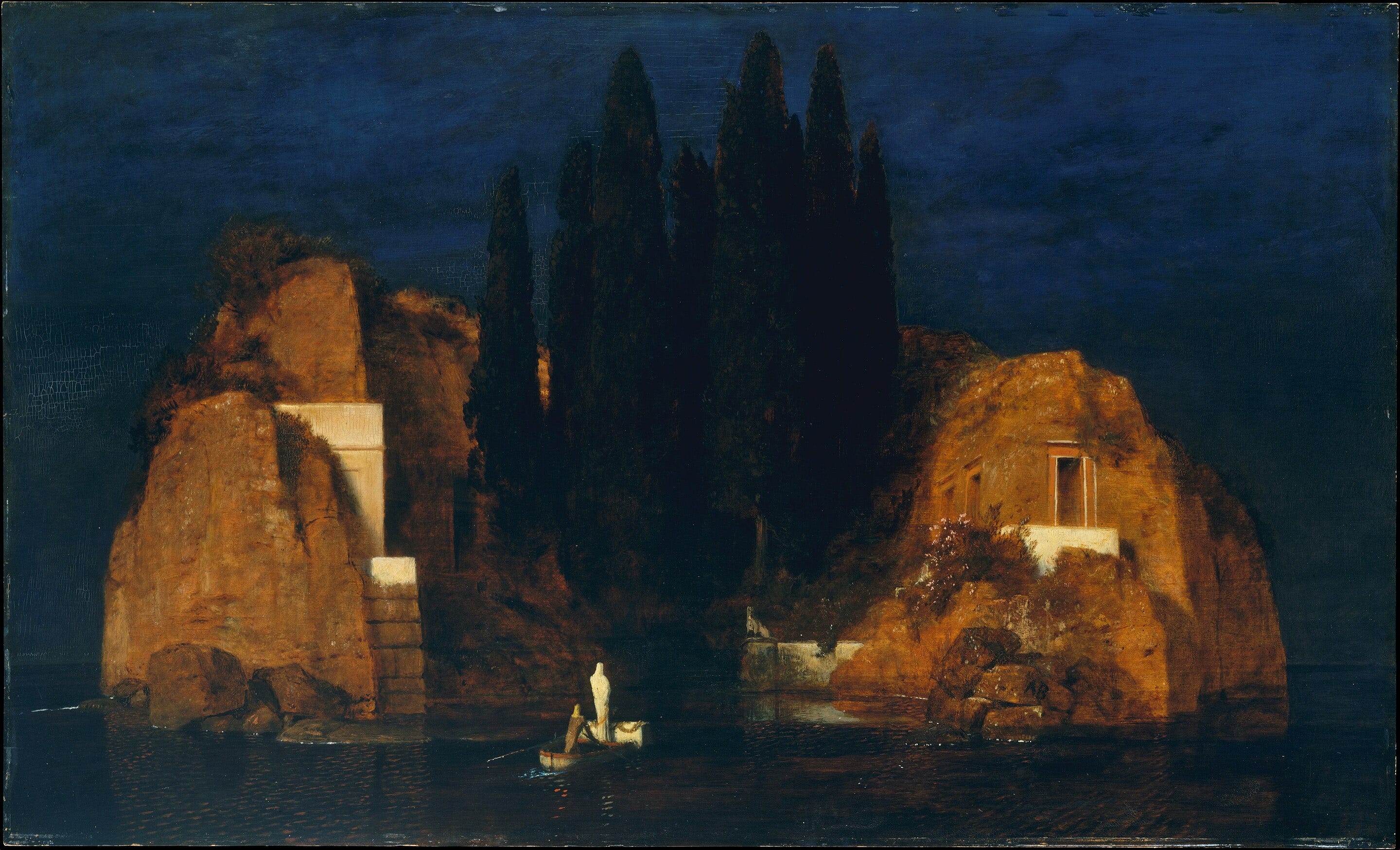
Myths often plunge into the human psyche, exploring emotions, fears, desires, and spiritual quests. They provide a framework to grapple with the mysteries of human existence. Countless artists have drawn inspiration from myths across various art forms—sculpture, music, painting, writing, and theatre. For a long period, I found myself immersed in Rachmaninoff's 'The Isle of the Dead,' a mesmerizing symphonic poem that captivated me endlessly. Its evocative nature was unforgettable. I recall the CD cover featuring one of the many versions of 'The Isle of the Dead' (Die Toteninsel), a painting by Arnold Böcklin, which he reproduced numerous times. My creative works have often drawn on or reinterpreted myths. However, recently, something unexpected occurred.
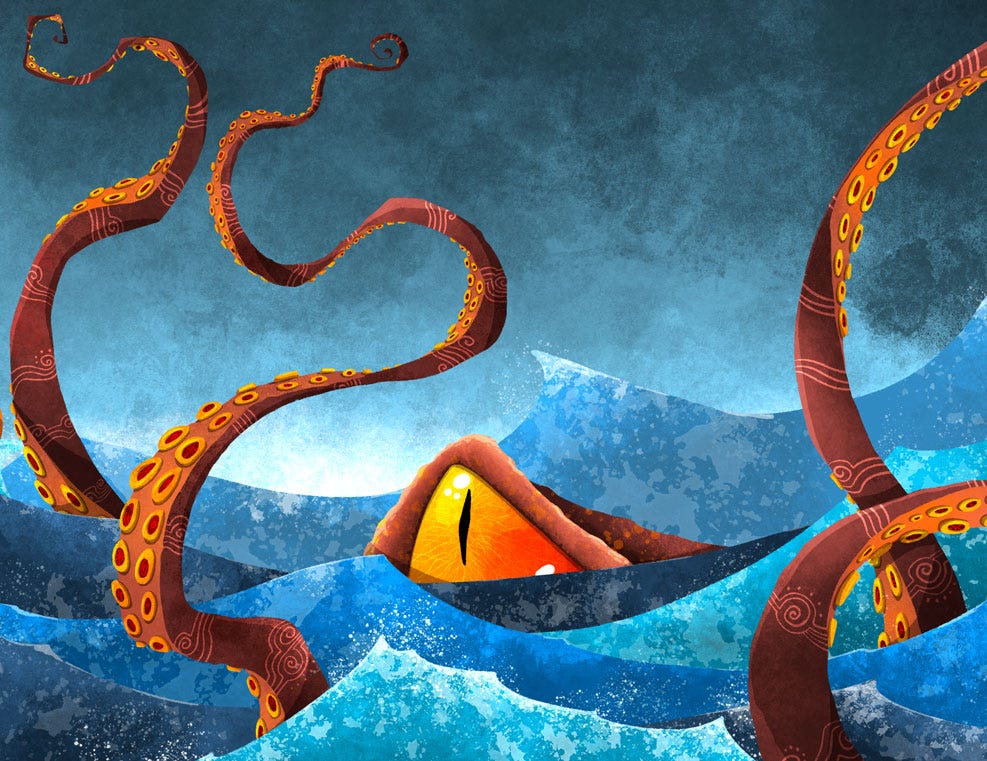
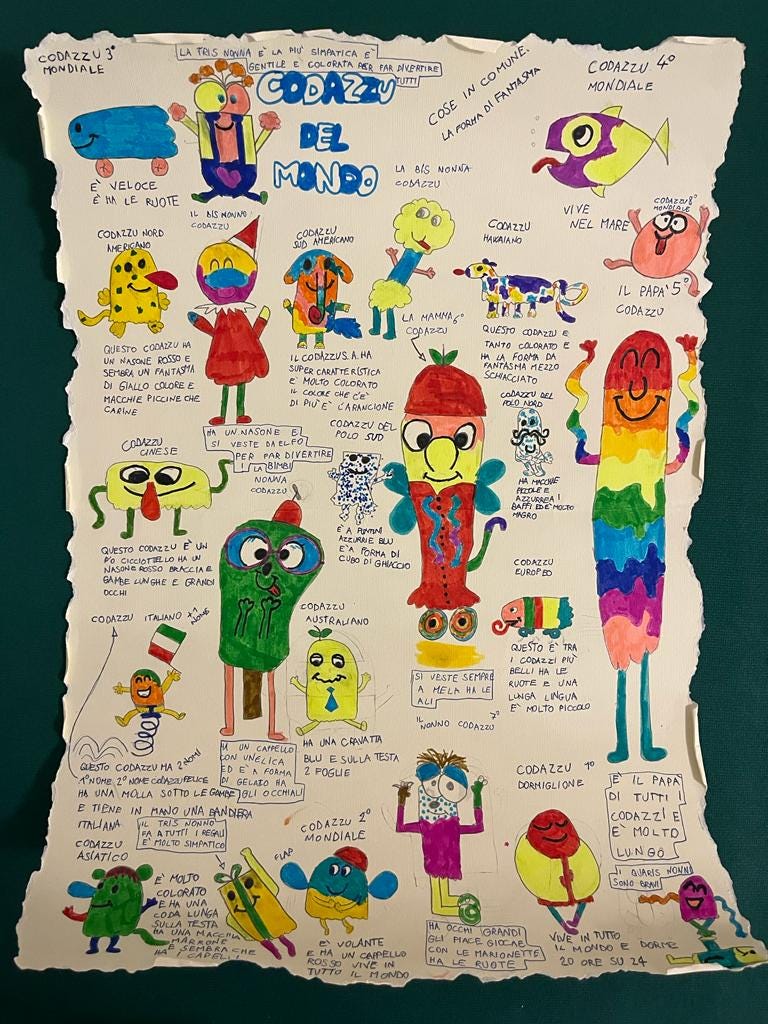
Last year, the mischievous troupe of my nephews, who are both funny and amazing, paid me a visit. We don't get to see each other often; they live in Italy, and I'm in England. It's not an insurmountable distance, but it's not always easy to meet as frequently as we'd like. You know how kids are—little bundles of volcanic energy, always bursting with incredible enthusiasm. So, one evening, to keep them occupied, I began recounting mythological stories that I knew would captivate their interest. However, I made a crucial mistake by mentioning one of my favourite creatures—the Kraken. ...they'd never heard of it. Instead of simply describing it to them, I decided to change the rules of the game and asked them to imagine and draw it themselves. That's when the doors to fantasy and imagination swung wide open!
It was incredibly revealing to witness how my nephews were more captivated by the fascinating creatures woven into the fabric of the story rather than the myth itself. They reshaped and recoloured these creatures with their own imaginations, often blending in fragments of their own emotions, fears, and experiences. Children possess this incredible ability to perceive the world transforming it through the lens of fantasy. In their eyes, everything becomes animated, magical, and enigmatic. Needless to say, we spent hours immersed in our fantasy world, suspended between reality and a realm where dragons, Olicantos, and Catoblepas lived undisturbed.
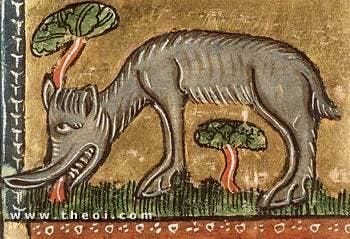
The game continued long after they returned to Italy. During our lengthy and playful phone calls, we kept narrating tales of mythological creatures in a whimsical and eccentric manner. I found myself delving into my books, eagerly seeking stories for our next session. I thoroughly enjoyed journeying with them across the Seven Seas, venturing into the most extraordinary corners of the world in search of the most peculiar beasts. I rediscovered the joy of recounting and illustrating a bestiary. My mind wandered back to medieval maps bearing the phrase 'Hic Sunt Dracones' (Here be dragons), and to the wonderfully quirky bestiaries where fantasy and reality intertwined in unpredictable ways. I marveled at how real animals, unknown or unseen in Europe, were transformed by word-of-mouth descriptions into creatures that bore little resemblance to their real inspirations. Simply incredible!
There is nothing quite like curious creatures—monsters, beasts of all shapes and sizes—to ignite kids' imagination, and mine as well, actually. They are not just different from us; they embody the concept of 'different,' they are the quintessential 'other.' Mysterious and outlandish, they possess strange powers and abilities representing the unknown and fantastical. They embody traits and characteristics that diverge from everyday life, offering a sense of adventure and excitement that allows children (and not just them) to explore worlds beyond reality and engage their creativity.
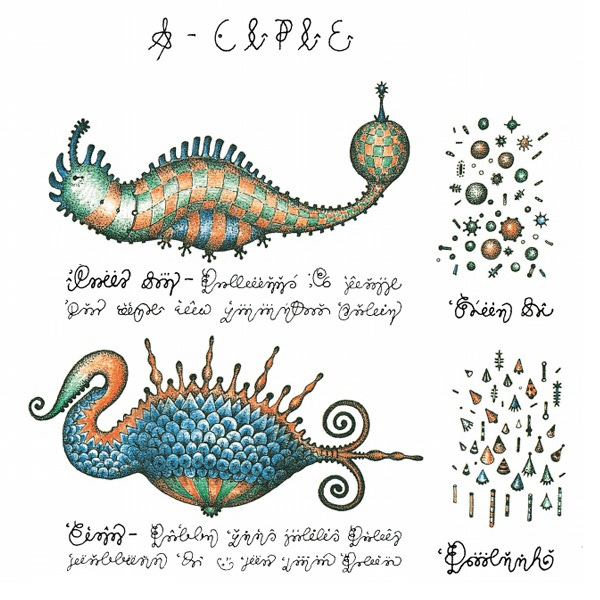
As an adult, I've found a deeper aspect in them. They evoke a bygone era when the world was an uncharted map full of mystery waiting to be unraveled. We live in a world that has become all too 'predictable,' where every corner has been explored, mapped out, and investigated; a world where religions and mythologies have long lost their roles in explaining natural phenomena, and where Science has answered many questions about the world's origins and its fate (entropy, the final act!). We feel a craving for mystery, the unknown, and perhaps this is one of the reasons why the occult, tarot (which I adore and create), New Age beliefs, and peculiar theories are so popular. Personally, I feel this need deeply, and I'm drawn to monsters, strange creatures, and dinosaurs because they allow me to live again that time when the world was still uncharted, mysterious, and magical—the time of my childhood.
The creatures and stories I shared with my nephews were numerous and exceptionally unique. I decided to write them down and illustrate them thoroughly, and now they've become one of the most thrilling projects I've ever worked on. They've evolved into a book and a theatre show-animation series that I'm currently developing. I'd love to share the progress, the inspirations, and the motivations behind my work. I'm eager to connect with other imaginative minds—those who are a bit crazy and never want growing—to share ideas and establish a small community of joyful, creative... kids.
I hope you enjoy this menagerie of menacing monsters, creepily cruel creatures, and beautifully benevolent beasts.
Andrea
Artist, anumator, and author Andrea Aste presents an in-depth take on myth, archetypes, mythological creatures, and more!