
The Nights That Inspired My Work (a sensitive, Byron, Shelley, and Polidori)
Unearthing the Ghastly Lenormand Deck

My fascination with the macabre began in the fertile ground of childhood. I devoured ghost stories; the chilling classics of Victorian horror, and the penny dreadfuls with their gruesome tales. Poe, Le Fanu, and Lovecraft – their words painted a darkly captivating underworld that both terrified and enthralled me. Countless nights were spent reading, haunted by the ghosts and monsters that leaped from the pages. These experiences were further fuelled by my sweet, yet slightly eccentric mother, who held nightly conversations with spirits. The line between imagination and reality blurred, creating a mystical and magical world that deeply shaped my creative spirit.
This world continues to serve as a constant source of inspiration, especially when crafting Tarot decks. Each creation is an attempt to recapture the magic of those childhood nights, where the whispers of the unseen seemed to fill every corner. My Grandmother walked the halls, the dead left messages through displaced objects, and Tarot became a gateway to otherworldly dimensions. Everything felt undeniably real. My mother's prophecies and stories went unchallenged, and the days, though seemingly ordinary, gave way to a different reality when darkness fell. The veil thinned, and the occult and the magical danced hand-in-hand under the cloak of night.
The Enthralling Night at Villa Diodati
So, when I stumbled upon one of literature's most "haunted" nights, I was utterly captivated...
Imagine a year without summer. The world plunged into strange, dense darkness, the air heavy, the sky a bizarre, unreal colour. And then rain, so much rain. It was the summer of 1816, locked in a long, cold volcanic winter caused by the eruption of Mount Tambora in 1815. Mary Shelley, aged 18, and her lover (and future husband), Percy Bysshe Shelley, visited Lord Byron at the Villa Diodati by Lake Geneva in Switzerland's Alps. Byron was wiling away the time with his friend and personal physician, Polidori. Their homoerotic relationship was toxic, mysteriously tense and intriguing, complex enough to fill books with deep analysis, and we'll see why.
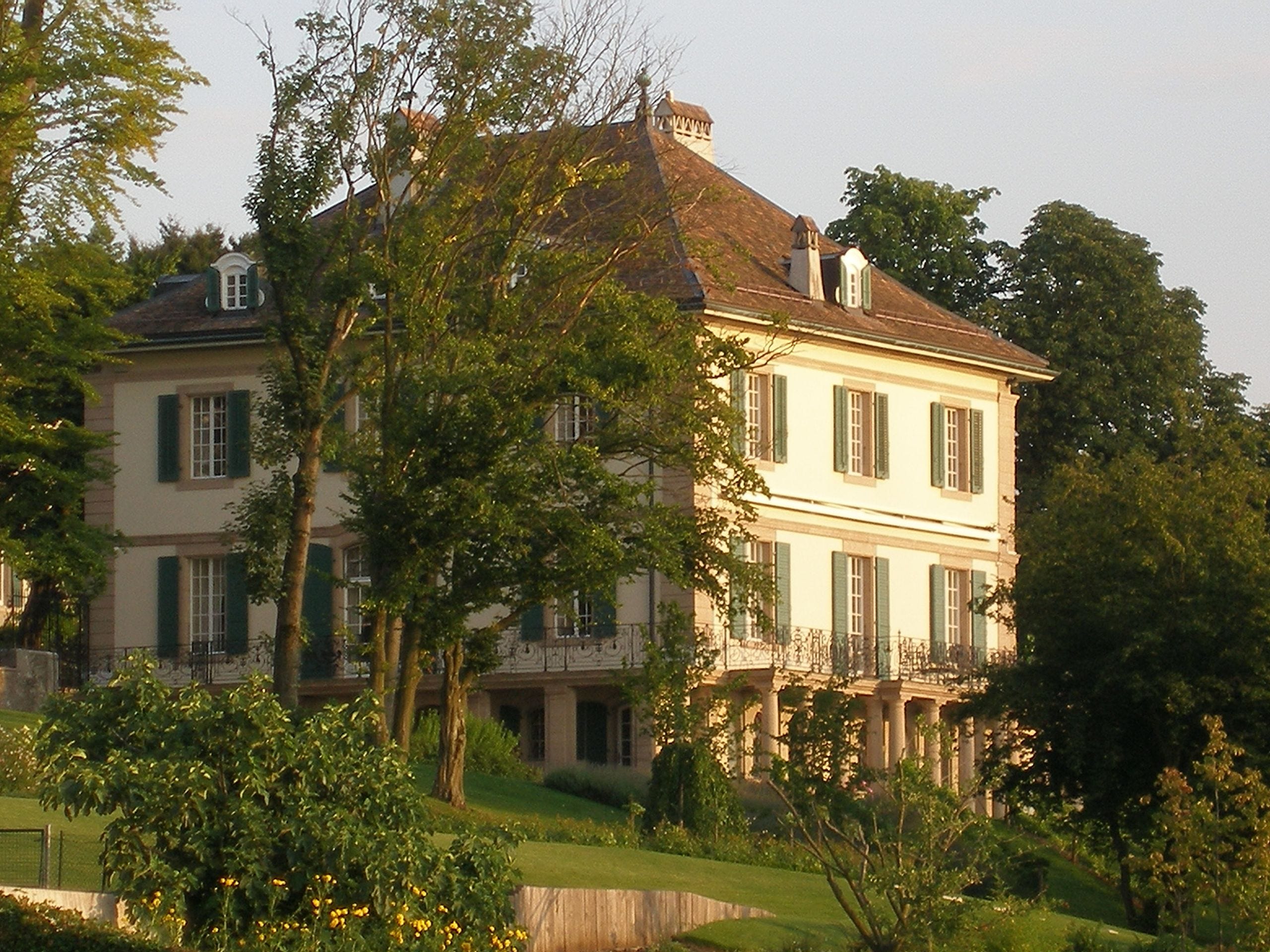
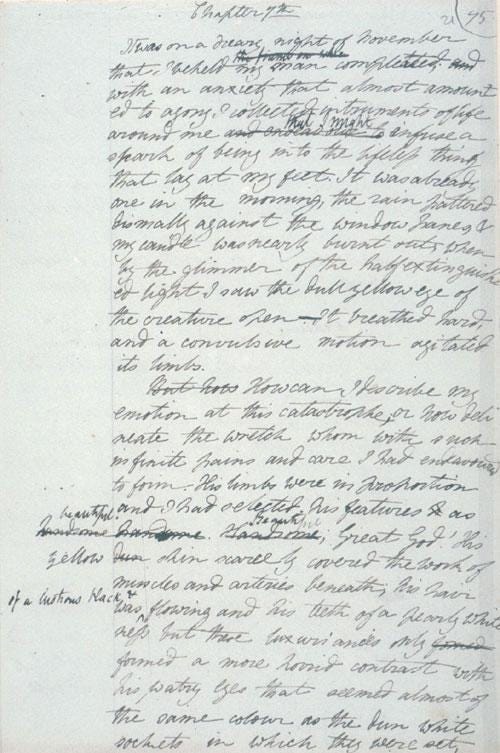
The weather was too cold and dreary that summer to enjoy the outdoor holiday activities they had planned, so the group retired indoors. They spent the days sitting around a log fire at Villa Diodati, reading German ghost stories translated into French from the book Fantasmagoriana. But one spectral night, inspired by Fantasmagoriana, Byron proposed that they each write a ghost story. This night changed horror literature forever! But it was quite a strange one; Shelley suffered a severe panic attack with hallucinations while Mary had a nightmare that inspired her short story.


Before arriving at Byron's villa, Mary had traveled through Europe along the river Rhine in Germany. She stopped in different picturesque locations, but one remained in her mind: a ruined castle (17 kilometres away from Gernsheim) where, two centuries before, an alchemist had engaged in bizarre experiments: Frankenstein Castle!
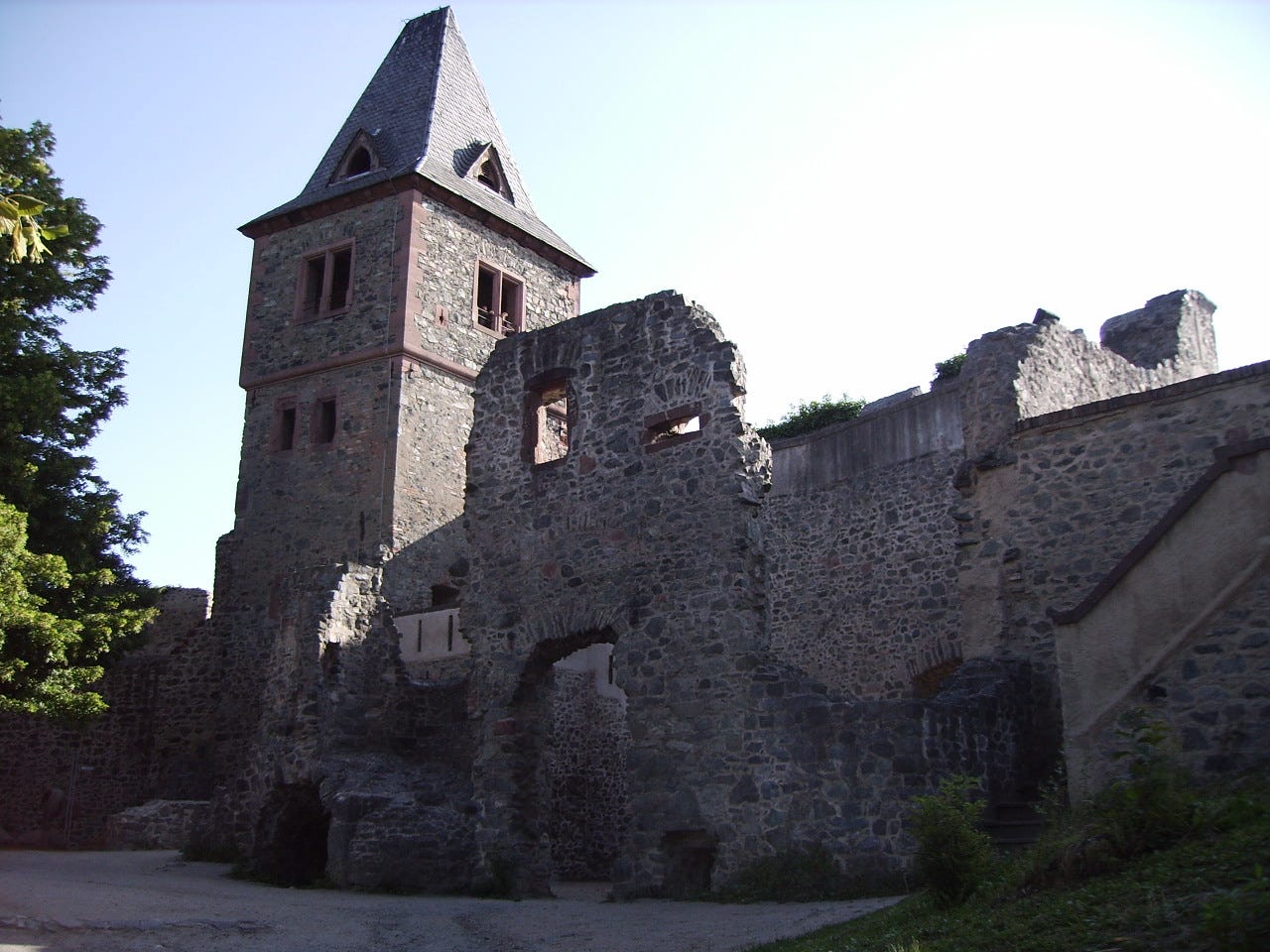
That name, along with the ruin of the castle and many discussions about Galvanism and occult ideas, particularly with her lover Percy, melded into the nightmare I mentioned, inspiring her story: Frankenstein, or the Modern Prometheus was born!
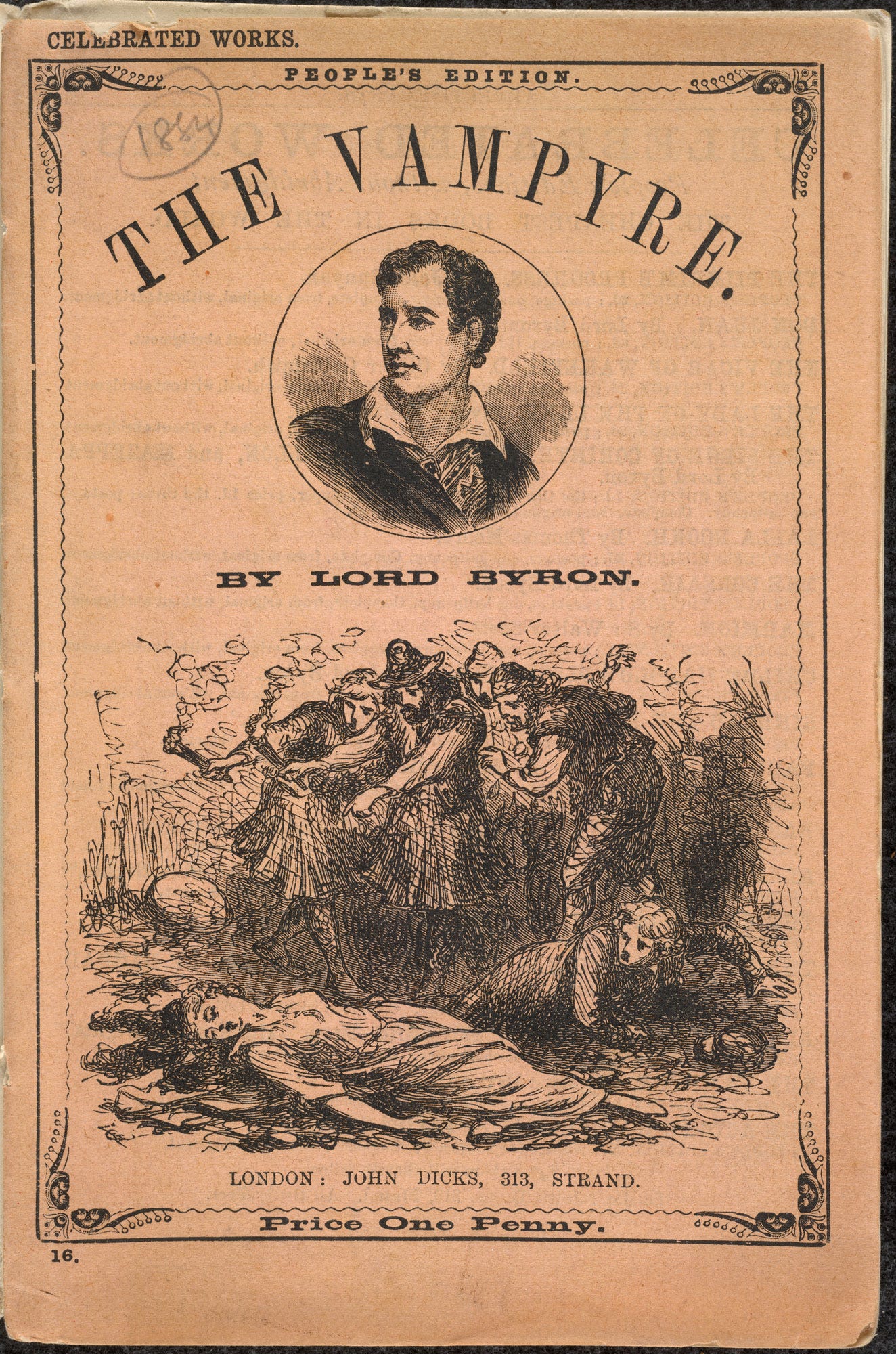
John William Polidori answered Byron's challenge by writing a short story called The Vampyre. It was so innovative and became so popular that it is considered the progenitor of the romantic vampire genre. Unlike Stoker, Polidori depicted his vampire as a refined, beautiful man, a seducer, a sort of romantic and sensual “undead Casanova”. His model was Lord Byron himself, and a few aspects of their relationship shaped the character.
Quite a night indeed!
Inspiration from the Shadows
It's no wonder that night continues to hold such a powerful grip on my imagination! It's not just the nights of my childhood, filled with my mother's spectral visitors, but even the quiet hours of the present. There's a magic in working at night, shrouded in the hush of shadows. My studio, bathed only in the soft glow of a desk lamp, becomes a stage where the dancing silhouettes of the forest trees outside play their parts. My studio is nestled in the English countryside, surrounded by fields and woods, a stone's throw from the medieval beauty of Durham. I draw inspiration from both the nights I've experienced and the ones I've read about in countless tales. All these nights weave together a tapestry that fuels my creativity and shapes this deck.
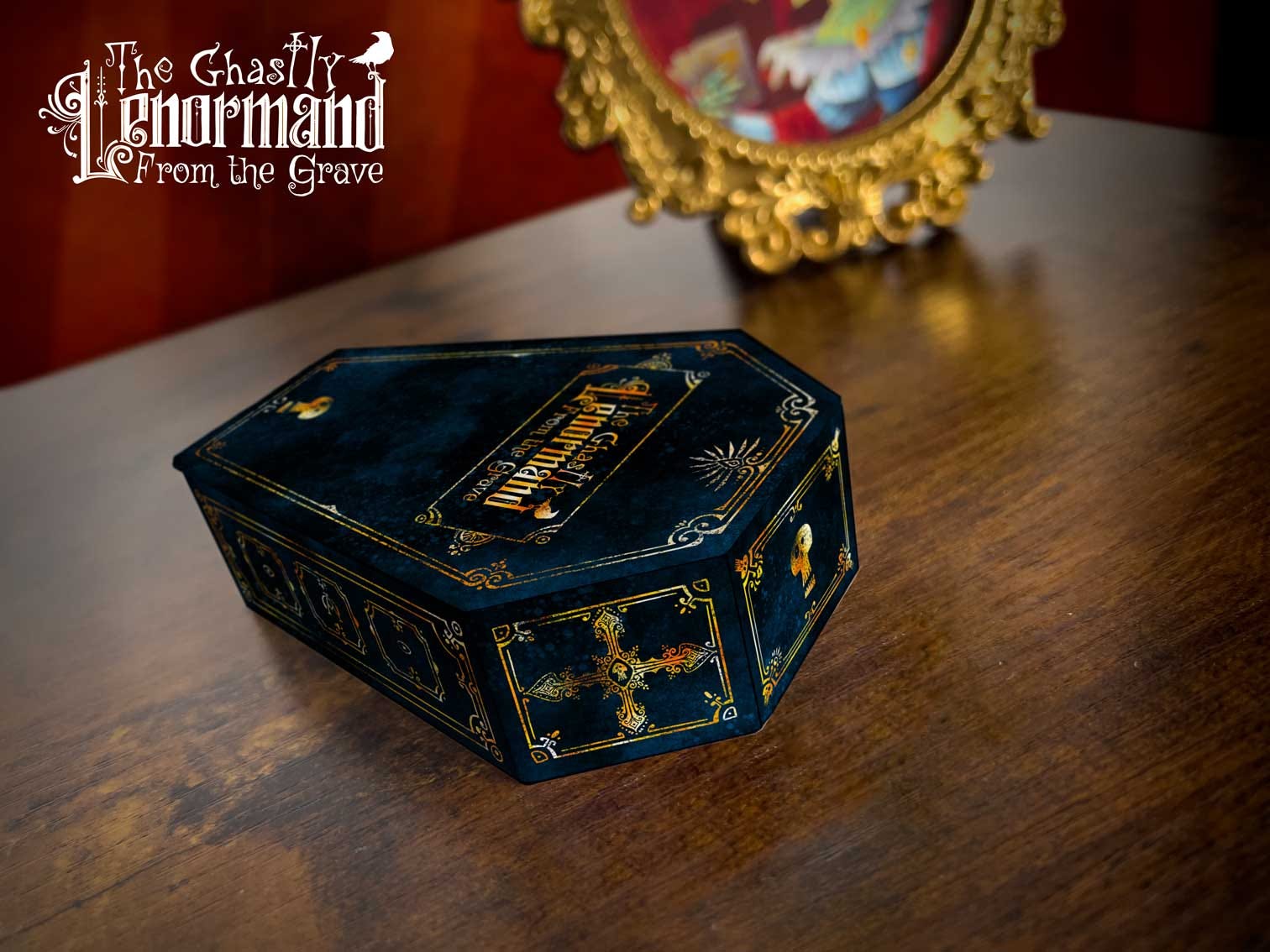
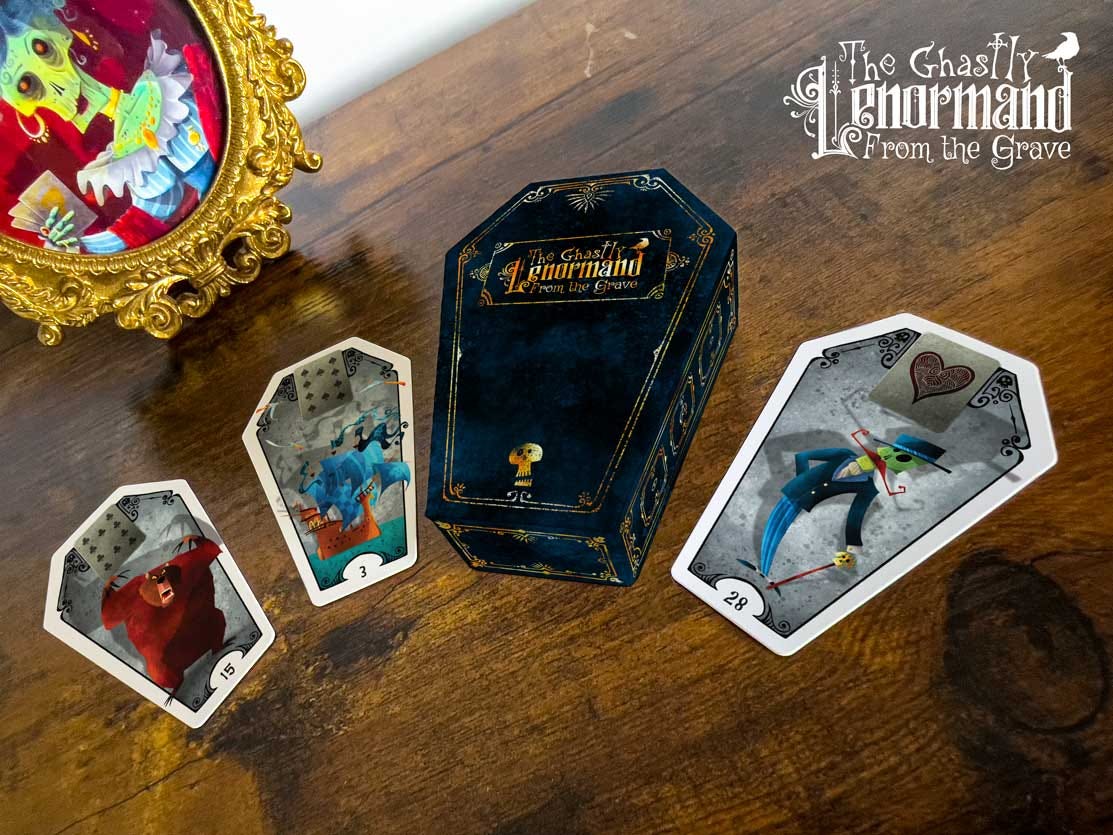
As you know, the cards themselves are shaped like coffins. So, it will come as no surprise that the box follows suit – a beautiful and macabre coffin itself! Many design elements draw inspiration from Victorian macabre art. While delving into historical and artistic references, I chanced upon (or: serendipitously discovered) an old photo of Lord Byron's coffin. This unexpected find became the final touch for my project, serving as both a source of inspiration and a tribute to that famous night at Villa Diodati.


The Macabre Coffin
Lord Byron's coffin served as a muse for the box itself. It embodies the passage of time, its surface marked with the subtle signs of wear, corrosion, and discolouration. I envisioned a purity of aesthetic, free from the clutter of branding, logos, or barcodes. The beauty of being one's own creative producer lies in this very freedom – the freedom from compromise! The lid proudly bears the name of its resident, the Ghastly Lenormand Deck.
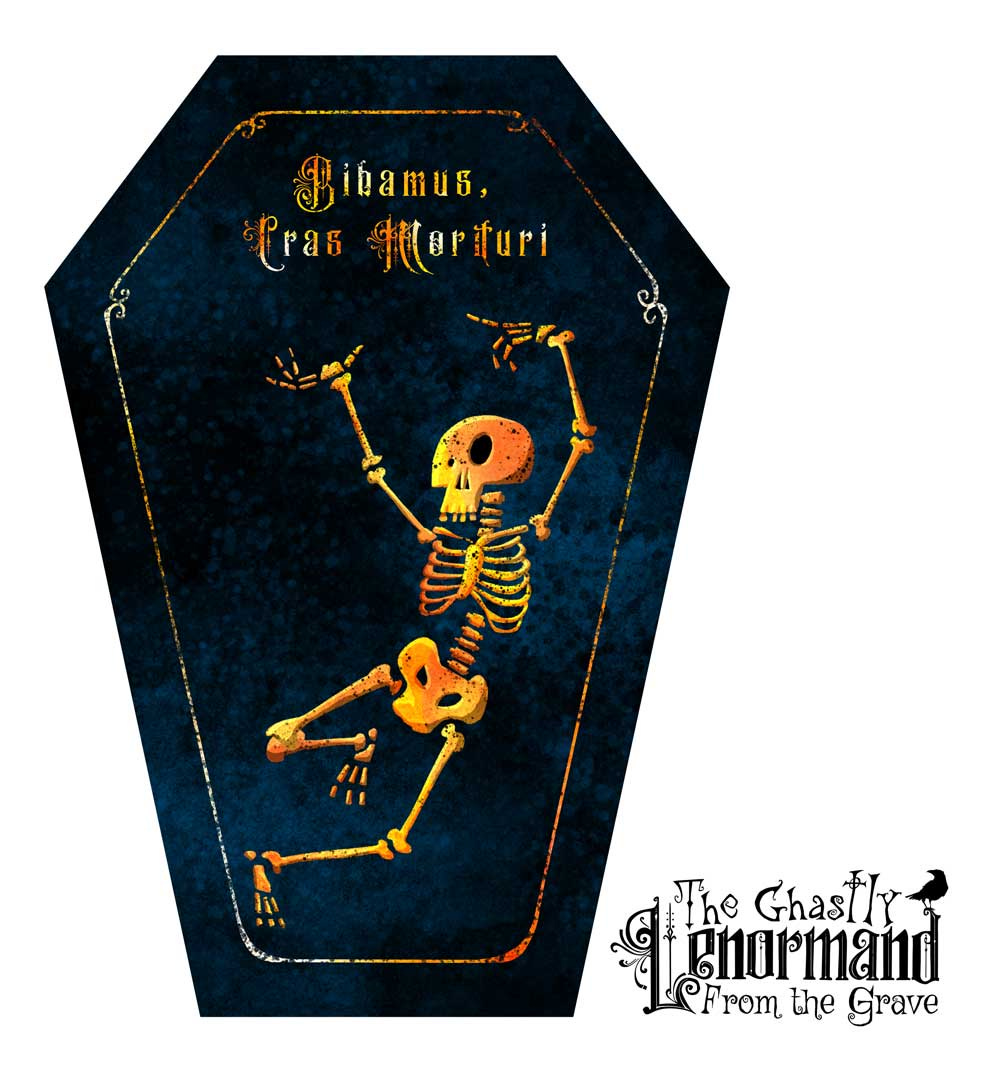
The bottom of the coffin features a captivating dance macabre (explored in a previous post – see the post here). A skeleton playfully cavorts with its skull, accompanied by the Latin motto "Bibamus, Cras Morituri". Translated, it means "Let's drink, for tomorrow we die". This is not a call for hedonism, but a memento mori – a reminder to savour life with a clear mind. It's an invitation to explore, create, and appreciate each precious moment.
The sides are adorned with a variety of geometric motifs and a unique symbol: the combined Greek letters Alpha and Omega; it represents the cycle of life, the connection between the beginning, the end, and a new beginning. It evokes the famous words of Hamlet from Shakespeare's play: "To die, to sleep – to sleep, perchance to dream – ay, there's the rub, for in this sleep of death what dreams may come..."
The Luxurious Interior
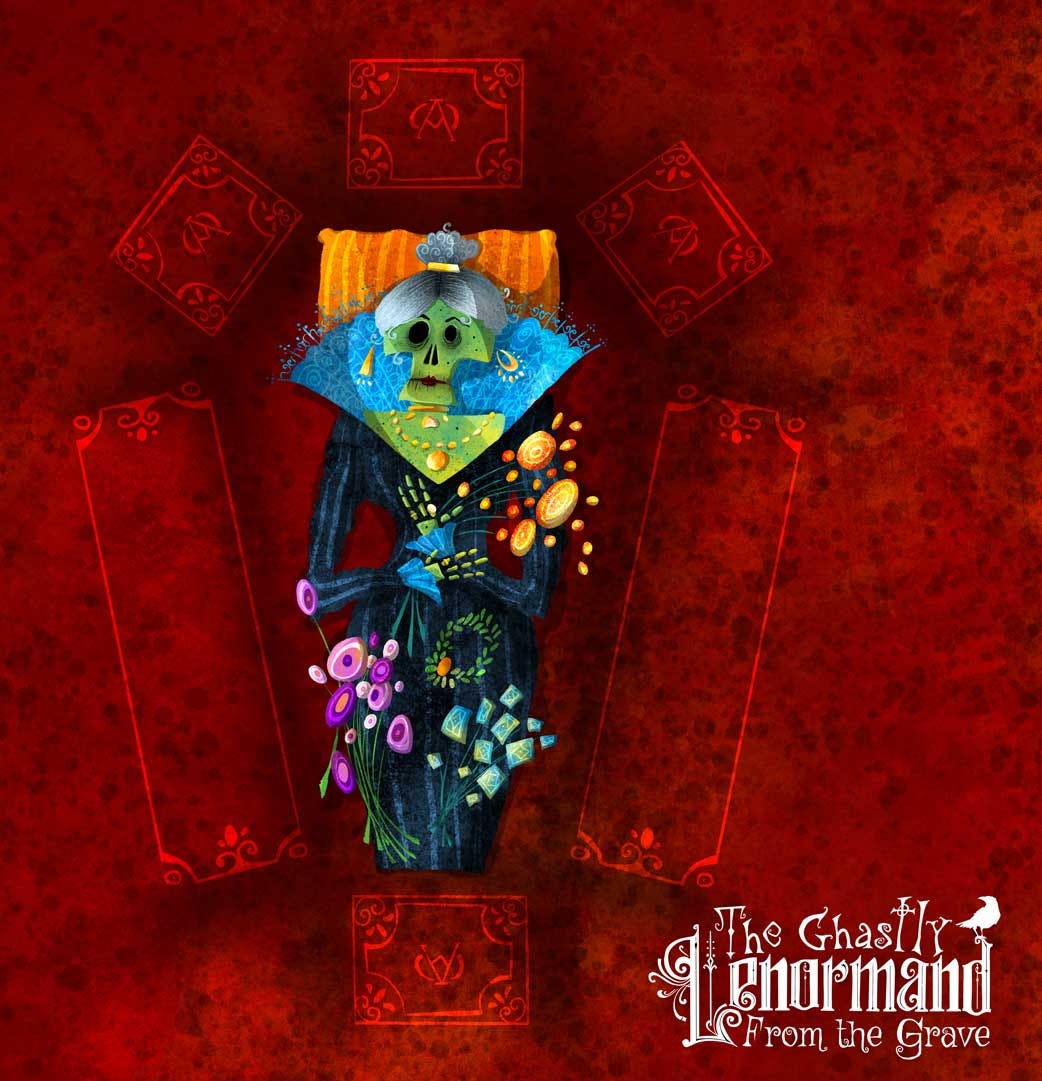
Unveiling the interior, a stark contrast greets the eye. The dark, imposing exterior gives way to a luxurious and voluptuous red, reminiscent of decaying velvet. Nestled upon a striped pillow lies a captivating figure – a beautiful corpse, dressed in mourning attire with a touch of unexpected panache. Is this Madame Lenormand herself? Perhaps a vampire? The mystery deepens as we observe the vibrant, fresh flowers cradled in her skeletal hands. A frown furrows her brow, hinting at a deeper story untold.
Postscript: A Pre-Raphaelite Inspiration
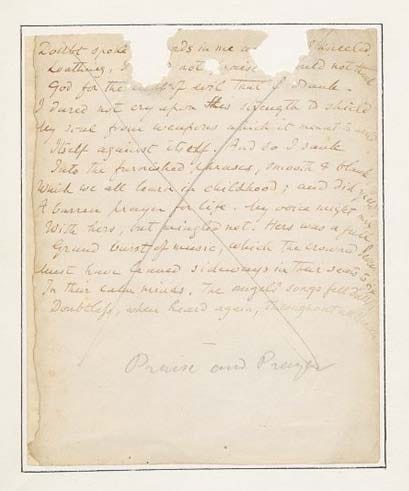
The inclusion of a corpse within the coffin-box draws inspiration from a story that has long haunted me for its gruesome, surreal, and macabre elements. It serves as a subtle homage to one of my artistic heroes, the famed Pre-Raphaelite painter Dante Gabriel Rossetti. Interestingly, a familial connection exists – Rossetti's uncle happens to be our very own Polidori! The story goes that Rossetti practically mirrored a scene from his uncle's chilling vampire tale....
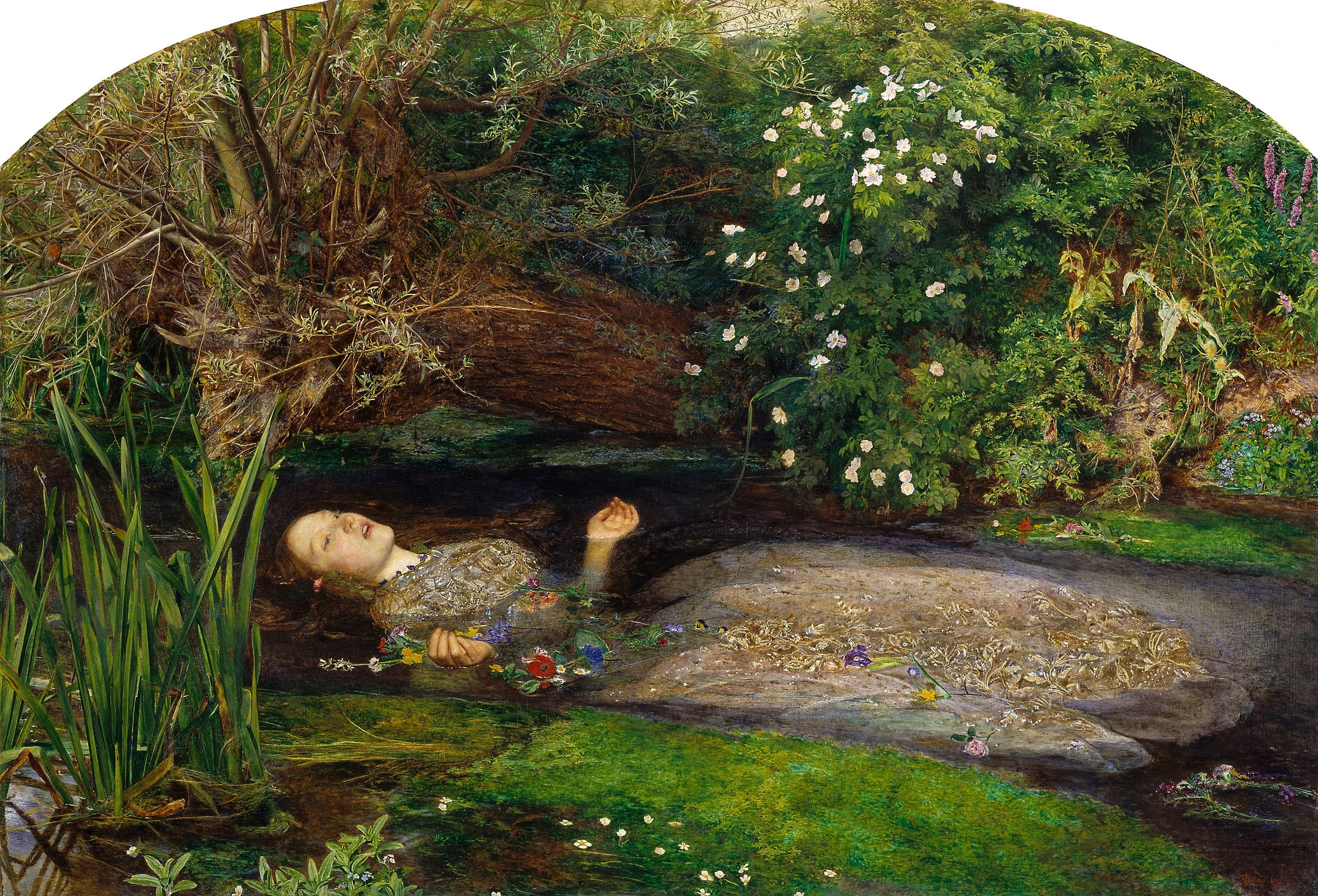
In August 1869, Rossetti authorized Charles Howell to disinter his wife Elizabeth's coffin to retrieve a handwritten book of Rossetti's poems, which he had placed beside her head before burial. With the aid of Dr. Llewelyn Williams and two others, Howell accomplished this in October 1869. Dr. Williams subsequently disinfected the book, and Rossetti then published its contents in Poems (1870).
A wave goodbye with another picture: the Coffin box and the coffin cards :)
Are you intrigued by the unveiling of The Ghastly Lenormand? If so, then please consider sharing your excitement with your friends! Their interest and support will be instrumental in bringing this project to life.
Stay tuned for further announcements, and soon, you'll have the opportunity to be among the first to own The Ghastly Lenormand through a crowdfunding platform: Kickstarter!
Have a macabre week :)
Andrea
What a beautiful coffin! Exquisite! The cards are amazing, too! I love the night myself. I have worked the third shift most of my life. Now I work on my writing and keeping up with the Internet in the oh dark thirty hours. I am looking forward to the crowdfunding!
The Villa Diodati looks like the house from the German Game of Hope. And I was having thoughts about that deck this morning.